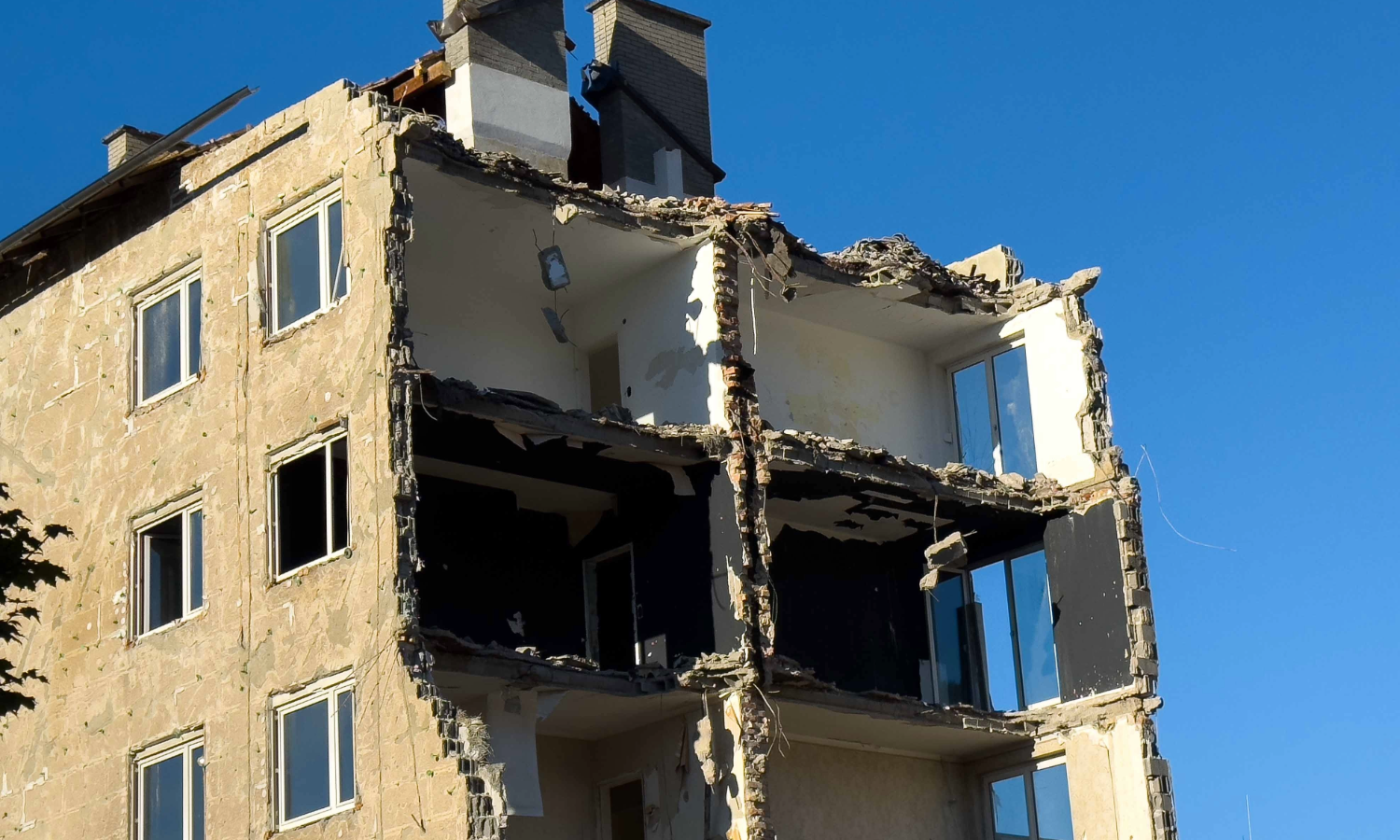
A recent newspaper report highlighted an alarming situation: the owner of a semi-detached property demolished their house, leaving the neighbouring home standing alone and its owner facing concerns about the exposed party structure. According to the report, the owner did not serve a party wall notice before carrying out the demolition.
The precise responsibility of those involved will depend on technical evidence and the full history of the works. Nevertheless, the case illustrates an important limitation and a potentially useful application of the Party Wall etc. Act 1996.
Does demolition require a party wall notice?
The Act does not automatically cover every aspect of demolishing a semi-detached house. However, the Act is likely to apply where demolition involves cutting into or away from a party structure, or where it exposes a party wall the building previously enclosed.
The Act allows a building owner, the party wanting to undertake the notifiable work, to expose a previously enclosed party structure, provided they give it adequate weather protection. The building owner must serve a party wall notice describing the intended works before starting.
A party wall notice is not merely administrative. It gives the adjoining owner an opportunity to understand the proposals and enables appointed surveyors to agree safeguards. These might include:
- temporary protection
- structural support
- weatherproofing
- access arrangements
- monitoring
- a schedule recording the neighbouring property’s condition.
The owner may also need to notify the local authority about the demolition and comply with planning, building control and health and safety requirements. A party wall award does not replace any of those obligations.
What happens if no party wall notice is served?
It is tempting to think that the neighbour can simply appoint a party wall surveyor retrospectively. However, the Court of Appeal’s decision in Power & Kyson Ltd v Shah [2023] EWCA Civ 239 shows why that may not work.
In that case, the building owner began notifiable work without serving notice. The Court held that the adjoining owners could not unilaterally activate the Act’s dispute-resolution procedure and obtain an award. Without a notice, the statutory process had not properly begun and the surveyors had no jurisdiction to make an award.
People sometimes describe this principle as “no notice, no Act”, but that phrase should not cause confusion. Failing to serve notice does not give a building owner permission to undertake unsafe work or damage neighbouring property.
The affected neighbour may still pursue claims in trespass, nuisance or negligence. If the building owner proposes to start or continue the work, the neighbour may also seek an injunction. Where safety is in doubt, they should contact the local authority, notify their insurer and obtain urgent advice from a structural engineer and solicitor.
Can you obtain a retrospective party wall agreement?
People commonly use the phrase “retrospective party wall agreement”, but it does not precisely describe how the Act operates.
Where a building owner begins notifiable work without the required notice, the adjoining owner cannot simply activate the Act and obtain a retrospective party wall award. A later agreement would not retrospectively authorise the original demolition or bring that work within the statutory process.
The owners may still enter into a private agreement covering practical matters such as repairs, access and costs. However, such an agreement differs from an award under the Act. The parties may also be able to start a new statutory process for separate repair work proposed following the demolition.
Is there a penalty for not serving a party wall notice?
The Party Wall etc. Act 1996 does not impose a specific fine or automatic penalty for failing to serve a notice. However, proceeding without notice can still have serious legal and financial consequences.
If the building owner proposes to start or continue the work, the adjoining owner may seek an injunction. They may also pursue a claim if the work causes damage or interferes with their property rights. Without a schedule of condition, the parties may find it more difficult and expensive to resolve a later dispute about the cause and timing of damage.
Can the remaining owner serve their own notice?
There may also be a constructive way for the remaining homeowner to use the Act.
If demolition leaves the party structure defective or in want of repair, the remaining owner could potentially become the “building owner” for the purposes of proposed remedial work. The Act gives owners rights to make good or repair a defective party structure and, where necessary, to demolish and rebuild it.
If the proposed repair work falls within the Act, the remaining owner could formulate an appropriate repair scheme and serve a fresh party structure notice on the owner of the demolished property. This notice would not retrospectively authorise the original demolition. Instead, it would begin a new statutory process relating to the proposed repairs.
If the adjoining owner dissents or does not respond within 14 days, a dispute arises and the owners can appoint surveyors. Their award can address:
- the necessary work;
- access arrangements;
- timing;
- protective measures; and
- the allocation of costs.
Who pays for repairs to the party structure?
The owners do not necessarily divide repair costs equally. Surveyors may apportion the expenses of repairing a defective party structure according to the owners’ respective use of the structure and their responsibility for the defect or want of repair.
If the evidence establishes that the demolition caused the problem, that could significantly affect how the surveyors allocate the costs. The surveyors can also apportion reasonable fees through the award, taking account of matters such as responsibility.
Serve notices before demolition
The lesson is straightforward: building owners should serve the required notices before demolition begins.
Where a building owner fails to serve a party wall notice, an affected neighbour cannot simply obtain a retrospective award. However, they may still have other legal remedies and may be able to initiate a new Party Wall Act process for the necessary repairs.
If you have a question regarding whether the Party Wall Act applies to your building works, our building surveyors are here to help. Contact our Building Surveying Litigation team for a friendly chat.