
Reinstatement Cost Assessment
Make sure your property is correctly insured with regular Reinstatement Cost Assessments, especially with rising build costs impacting the figure needed by insurance companies.
Reinstatement Cost Assessment services for the South West
Reinstatement Cost Assessments (RCAs) provide the figures insurance companies require for the demolition and rebuilding of the property in the event of fire, flood etc, usually on the basis of a ‘day one reinstatement’ (the declared value). Insurance companies require this to be updated usually in two to five yearly cycles to ensure that an accurate insurance value is in place. This is particularly important in the current climate, given the exponential increase in build cost inflation since the Covid-19 pandemic.
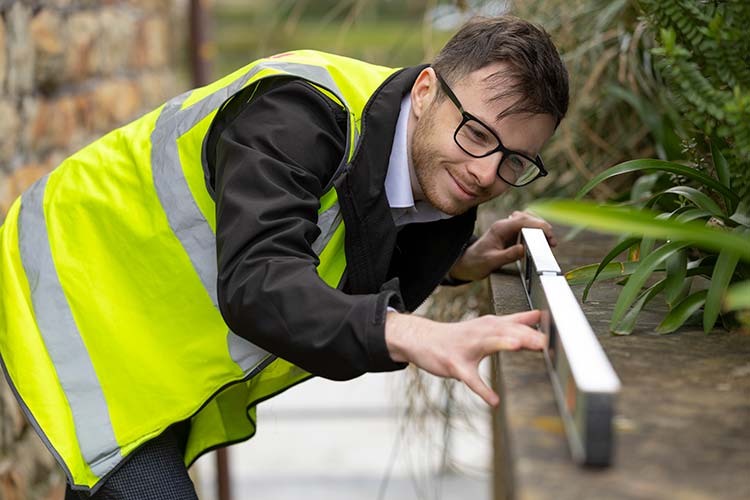
Over or under-insuring your asset can result in significant issues. Over-insure your asset and you’ll have to pay a premium on your insurance which won’t necessarily align with what your property is worth, while under-insuring your property could be catastrophic in the event of a claim that relies on an under-estimate of the costs. Any pay-out will be restricted to the total value stated by the customer on the policy proposal, which may have originated from a report of an RICS surveyor. We follow the RICS guidance on providing a Reinstatement Cost Assessment which looks at an assessment value in a structured and holistic way, incorporating any unique features, the location, historical status and hard landscaping, to name a few. Allowance is made for demolition (including party walls where applicable), site clearance and any fees likely to be incurred.
Landlords should pay particular attention to fixtures and contents, including tenants’ fixtures, fittings and external areas that the terms of the lease require the landlord to insure. Tenants’ may also hold insuring obligations, so it is important to ascertain who has the responsibility to supply the value. If these obligations seem uncertain, our Lease Advisory department may be able to assist before engaging a Building Surveyor to carry out an RCA.
Clients should bear in mind that desktop assessments that do not involve site visits fall outside the scope of the RICS guidance note and insurers may not accept this as a basis for setting cover. Please get in contact with one of our Building Surveyors if you think you may be due an assessment renewal and they will gladly assist you in understanding your requirements.


Building Surveys & Due Diligence Case Studies
Reinstatement Cost Assessment FAQs
What is a reinstatement cost assessment?
It gives you an informed estimate of the amount needed to put your building back following a major insured loss. We assess the property itself and the costs involved, so you have a sound basis for the building value you declare to your insurer.
Is the reinstatement cost the same as the property’s market value?
No. Market value is concerned with what a property might sell for. Reinstatement cost is concerned with rebuilding it and may include demolition, construction and professional fees. The two figures can be very different.
Why do I need a reinstatement cost assessment?
If your building is insured for less than it would cost to rebuild, you may face a shortfall if you make a claim. An assessment helps you provide your insurer with a figure based on the characteristics of your property, rather than relying on the previously insured value or market valuation.
What does the assessment take into account?
We consider the building’s size, construction, location and distinctive features, along with relevant demolition and rebuilding costs. Listed status, unusual materials and external works can all affect the figure.
Will you visit the property?
Yes, RICS guidance recommends a visit, a number of insurers will not accept desktop valuations. A visit allows us to understand the building and prepare an assessment that reflects its particular features ensuring any anomalies that could affect the re-build value are included.
Can you assess a listed or unusual building?
Yes. Historic features and unusual construction can make rebuilding more complex. We take these into account when preparing the assessment.
What does “day one reinstatement value” mean?
This is the estimated cost of reinstating the building at the start of the insurance period. It is often called the declared value. Your insurer will use it in accordance with the terms of your policy.
How often should I update my assessment?
It is sensible to review your assessment regularly, especially after alterations to the building or if the existing figure is several years old. Construction costs also change over time. Your insurer or broker can advise whether your policy specifies a review period.
I already have a building value on my insurance policy. Do I need a new assessment?
It depends on how that figure was calculated and when it was last checked. If it came from a purchase price, a market valuation or an older policy, it may no longer reflect the cost of rebuilding the property.
How do I arrange an assessment?
Contact our Building Surveying team with the property address and any plans or existing insurance information you have. We can discuss what is needed and provide a fee proposal.
See what our clients say about us
